History & politics · 日本名人
Emperor Meiji 明治天皇
めいじてんのう
Emperor Meiji (1852–1912), personal name Mutsuhito, was the 122nd emperor of Japan, reigning from 1867 to 1912. His reign saw the Meiji Restoration, the Meiji Constitution and Japan's transformation from a feudal society into an industrial and military power. He became the symbol of the modern Japanese state, and Meiji Jingū in Tokyo was founded to enshrine him.
- Personal name
- Mutsuhito; childhood title Sachi-no-miya
- Birthplace
- Kyoto
- Parents
- Emperor Kōmei and Nakayama Yoshiko

Birth and accession
Mutsuhito was born on the 22nd day of the 9th month of Kaei 5 (3 November 1852) in Kyoto, the second son of Emperor Kōmei and Nakayama Yoshiko, daughter of the courtier Nakayama Tadayasu. Known as a child as Sachi-no-miya, he was raised at his mother's family home according to court custom and was made crown prince in 1860.
His childhood coincided with the turbulent last years of the Edo period: Perry's arrival in 1853, the unequal treaties, the "revere the emperor, expel the barbarians" movement and Kyoto's rise as the political centre. Emperor Kōmei died suddenly at the end of 1866.
On the 9th day of the first month of 1867 (lunar calendar), Mutsuhito, aged 14 by Japanese reckoning, succeeded to the throne. That same year shogun Tokugawa Yoshinobu returned political authority to the court, and the court then proclaimed the Restoration of Imperial Rule, ending more than 260 years of Tokugawa rule.
Restoration and a new state
In spring 1868, while the Boshin War was still under way, the emperor swore the Charter Oath before the gods, promising deliberative assemblies, decisions by public discussion and the seeking of knowledge throughout the world. Later that year the era name became Meiji, and the rule of one era name per reign was established.
Edo was renamed Tokyo ("eastern capital"); the emperor travelled there in 1868 and resided there from 1869, the former Edo Castle becoming the palace. In December 1868 he married Ichijō Haruko, later Empress Shōken.
In the emperor's name the new government carried out sweeping reforms: the return of domain registers (1869), the abolition of domains in favour of prefectures (1871), a national school system, conscription, land-tax reform and the end of the samurai class. The emperor made frequent tours of the provinces so that a populace who had scarcely ever seen a monarch would come to know him.
The constitutional monarchy
In 1882 the emperor issued the Imperial Rescript to Soldiers and Sailors, placing the armed forces directly under the throne. On 11 February 1889 he promulgated the Constitution of the Empire of Japan, drafted under Itō Hirobumi on the Prussian model, which declared the emperor "sacred and inviolable" and supreme commander of the forces. The Imperial Diet opened in 1890.
Also in 1890 the Imperial Rescript on Education set out loyalty and filial piety as the basis of national education; copies of it and the emperor's portrait were enshrined in schools and remained central to state education until 1945.
Historians differ over his personal role. Most policy was run by oligarchs such as Ōkubo Toshimichi, Itō Hirobumi and Yamagata Aritomo, but studies also note that the emperor regularly attended deliberations and at times intervened to settle disputes among ministers.
Wars, expansion and last years
Under Meiji, Japan defeated Qing China in 1894–95, gaining Taiwan, and Russia in 1904–05, becoming the first modern Asian power to defeat a major European state. Japan annexed Korea in 1910, and in 1911 completed revision of the unequal treaties, regaining tariff autonomy.
These victories also opened the path of colonial expansion, which neighbours such as China and Korea view very differently from domestic Japanese accounts; this is an inseparable part of any assessment of the era.
Suffering from diabetes and nephritis in his last years, the emperor died on 30 July 1912 (per the Imperial Household Agency; some sources say 29 July) aged 59 and was buried at Fushimi Momoyama in Kyoto. On the day of the funeral General Nogi Maresuke and his wife committed ritual suicide, an event that shocked the nation and appears in Sōseki's Kokoro.
The man and his poetry
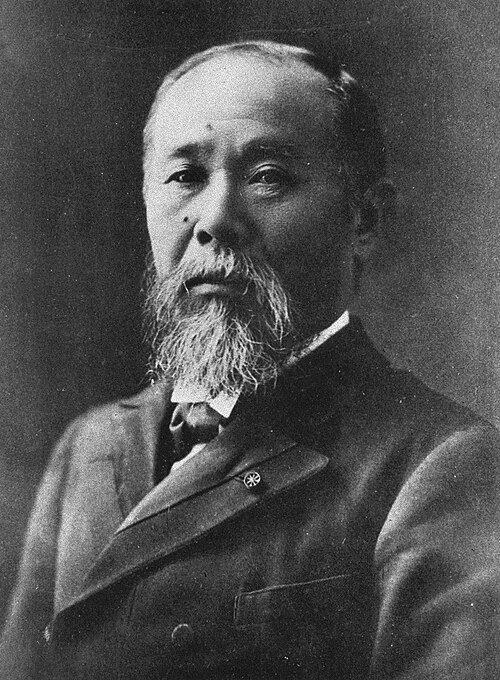
Emperor Meiji was the first Japanese monarch to appear in public in Western military uniform, with short hair and a beard, a deliberate image of a modern sovereign. His official portrait (goshin'ei) is in fact a photograph of a drawing by the Italian artist Edoardo Chiossone.
A devoted waka poet, he left some 100,000 poems according to Kotobank, more than any other emperor, some of which are still used in education and ceremonies.
Legacy
Meiji Jingū in Shibuya, Tokyo, was founded in 1920 to enshrine the emperor and Empress Shōken; its forest of about 70 hectares was planted with trees donated from all over Japan. It is among the most visited sites for hatsumōde (New Year visits). His birthday, 3 November, is now Culture Day, a national holiday.
The Meiji era is often cited as a model of rapid Asian modernisation, but it is also criticised for laying foundations of emperor-centred absolutism and later militarism; both views are needed to understand his place in history.
Connection with Vietnam
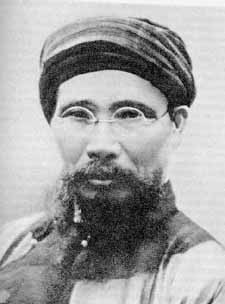
Meiji modernisation and Japan's 1905 victory over Russia made a deep impression on Vietnamese scholars in the early 20th century. Phan Bội Châu went to Japan in 1905 and launched the Đông Du (Go East) movement to send young Vietnamese to study there; Japan's example also influenced the Tonkin Free School and the Duy Tân reform movement. In 1908–09, however, the Japanese government, under agreement with France, expelled the Vietnamese students.
Japanese corner
In Japan emperors are known posthumously by their era name, so 明治天皇 (Meiji Tennō) names both ruler and era; in life the emperor is called 天皇陛下 (Tennō Heika). His personal name 睦仁 is read Mutsuhito.
Vocabulary: 元号 (gengō, era name), 一世一元 (one era per reign), 維新 (ishin, restoration), 五箇条の御誓文 (Charter Oath), 廃藩置県 (abolition of domains), 文明開化 (civilisation and enlightenment), 富国強兵 (rich country, strong army), 教育勅語 (Rescript on Education), 文化の日 (Culture Day).
文中词汇
- 明治天皇めいじてんのうEmperor Meiji (1852-1912, reigned 1867-…
- 明治維新めいじいしんMeiji Restoration (1868)
- 元号げんごうname of an imperial era (e.g. Heisei, S…
- 一世一元いっせいいちげんthe practice of assigning one era name …
- 五箇条の御誓文ごかじょうのごせいもんCharter Oath (of the Meiji Emperor); Fi…
- 廃藩置県はいはんちけんabolition of the han system and establi…
- 文明開化ぶんめいかいかcivilization and enlightenment; Japan's…
- 富国強兵ふこくきょうへいenrich the country, strengthen the army
- 大日本帝国憲法だいにっぽんていこくけんぽうConstitution of the Empire of Japan; Me…
- 教育勅語きょういくちょくごImperial Rescript on Education (1890)
- 明治神宮めいじじんぐうMeiji Shrine
- 文化の日ぶんかのひCulture Day (national holiday; November…