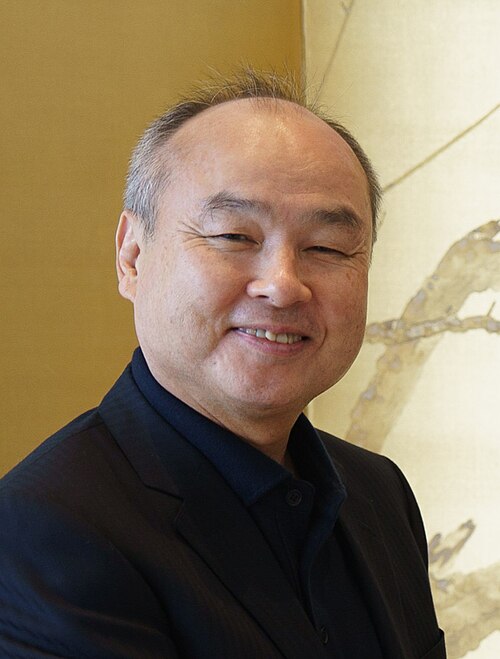
Science & business · 日本名人
Akio Morita 盛田昭夫
もりた あきお
Akio Morita (1921–1999) co-founded Tokyo Tsushin Kogyo, the forerunner of Sony, with engineer Masaru Ibuka in 1946. Leading sales and international business, he turned Sony into one of Japan's first global brands, associated with transistor radios, the Trinitron TV and the Walkman. In 1998 TIME named him among the 20 most influential business figures of the 20th century, the only Japanese on the list.
- Hometown
- Aichi Prefecture (sake-brewing family of Kosugaya, Tokoname)
- Nationality
- Japanese
- Education
- Physics, Osaka Imperial University (1944)

Family and early years
Akio Morita was born on 26 January 1921 in Aichi Prefecture, the eldest son of the Morita family, long-established sake brewers in the village of Kosugaya (now part of Tokoname). By tradition he was expected to become the fifteenth head of the family business, and his father had him sit in on business meetings from childhood.
The boy, however, was fascinated by machines and sound. An electric phonograph bought by the family led him to take apart and build radios and recorders. This passion took him to the physics department of Osaka Imperial University, from which he graduated in 1944.
During the Pacific War he served as a naval technical officer. On a wartime research committee working on heat-seeking weapons he met Masaru Ibuka, an engineer thirteen years his senior. The friendship shaped the rest of his life.
Founding Totsuko
After the war Ibuka set up a small radio-repair shop in the burnt-out Shirokiya department store in Nihonbashi, Tokyo. Morita read about it in the Asahi Shimbun and sought him out. In May 1946 the two formally founded Tokyo Tsushin Kogyo (Totsuko) with about twenty employees; the Morita family provided important capital.
Ibuka handled engineering and product development, Morita sales, finance and strategy. The first hit was the G-type tape recorder (1950). In 1953 Morita went to the US to license transistor technology from Western Electric; in 1955 the company launched the TR-55 transistor radio, followed by pocket radios for export.
In 1958 the company was renamed Sony. Morita wanted a short name pronounceable in any language, combining Latin sonus (sound) with the English slang sonny. He is also said to have turned down an order for 100,000 radios from Bulova because it insisted on its own brand instead of Sony.
Taking Sony worldwide
Morita believed a Japanese company had to understand markets from the inside. In 1960 he set up Sony Corporation of America; in 1961 Sony issued ADRs in the US, one of the first Japanese firms to do so, and in 1970 it listed on the New York Stock Exchange. In the early 1960s he moved his family to New York to learn American business first-hand.
As vice president (1959), president (1971) and chairman (1976), he led Sony into the Trinitron colour TV (1968), Betamax video (1975), the Walkman (1979) and the world's first CD player, the CDP-101 (1982, with Philips). Betamax lost the format war to VHS, a costly lesson.
Sony formed a joint venture with CBS Records in Japan in 1968, and in the late 1980s bought CBS Records (1988) and Columbia Pictures (1989), combining hardware with music and film. The Columbia deal was controversial in the US amid US–Japan trade friction.
The Walkman
The Walkman arose in 1979 from Ibuka's wish for a small cassette player to use on long flights. Engineers adapted the Pressman portable recorder, removing the recording function and adding light headphones. Many inside the company doubted a player that could not record would sell, but Morita pushed it to market.
It changed how people listened to music, making it personal and portable. The name Walkman, first criticised as bad English, later entered dictionaries. It is often cited as the classic example of Morita's philosophy: create new markets rather than simply ask consumers what they want.
Business ideas and last years
In Gakureki Muyōron (1966) Morita argued that companies should judge people by ability rather than school background. His autobiography Made in Japan (1986, with Edwin Reingold and Mitsuko Shimomura) explained Japanese corporate culture to Western readers and was widely translated.
He was active in US–Japan economic dialogue and served as vice-chairman of Keidanren. The Japan That Can Say No (1989), co-written with politician Shintaro Ishihara, caused a stir in the US; Morita did not allow his chapters into the authorised English edition.
In November 1993 he suffered a cerebral haemorrhage while playing tennis and withdrew from public life, stepping down as chairman in 1994. He died of pneumonia in Tokyo on 3 October 1999, aged 78, two years after his co-founder Ibuka (d. 1997).
Legacy
Morita is seen as the model of the internationalised Japanese executive who helped turn the postwar image of "cheap Japanese goods" into one of innovation and quality. Foreign honours included the Albert Medal (UK, 1982, the first Japanese recipient), a British order and the Légion d'honneur (1998).
There are critical views too: the Betamax defeat, the heavy later costs of the Columbia acquisition, and nationalist tones in The Japan That Can Say No. Even so, the engineer–businessman partnership of Ibuka and Morita is remembered as one of the most successful founding duos of the 20th century.
Connection with Vietnam
For generations of Vietnamese, Sony radios, TVs, cassette players and Walkmans were coveted electronics and the most familiar image of Japanese goods. Morita's Made in Japan is available in Vietnamese and often appears on business reading lists.
Japanese corner
Name: 盛田昭夫 (Morita Akio). Sony's original name was 東京通信工業 (Tōkyō Tsūshin Kōgyō), abbreviated 東通工 (Tōtsūkō). Co-founder: 井深大 (Ibuka Masaru).
Vocabulary: 創業 (sōgyō, founding a business), 創業者 (sōgyōsha, founder), 家電 (kaden, home electronics), 半導体 (handōtai, semiconductor), 造り酒屋 (tsukurizakaya, sake brewery), 学歴 (gakureki, academic background), 和製英語 (wasei eigo, Japanese-made English such as ウォークマン).
文中词汇
- 盛田昭夫
- 井深大
- ソニーSony
- 東京通信工業
- 創業そうぎょうestablishment (of a business); founding
- 創業者そうぎょうしゃfounder (of a company)
- 家電かでんhousehold (electrical) appliances; home…
- 半導体はんどうたいsemiconductor
- ウォークマンWalkman
- 造り酒屋つくりざかやsake brewer; sake brewery
- 学歴がくれきacademic background; academic credentia…
- 和製英語わせいえいごJapanese word constructed of elements f…