
Reactions & substances · Chemistry
Acids, bases and pH 酸・塩基とpH
さん・えんきとピーエイチ
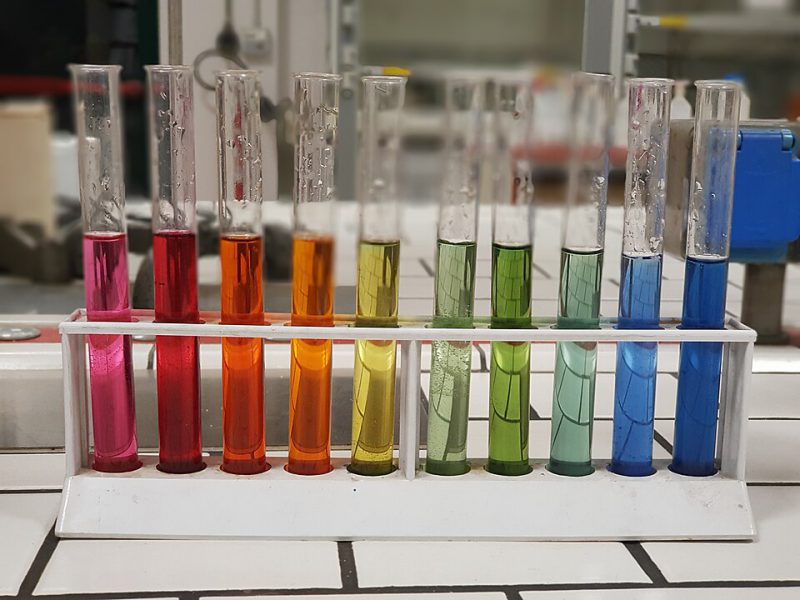
Acids taste sour and turn litmus red; bases turn it blue. The pH scale from 0 to 14 shows whether a solution is acidic, neutral or basic.
- pH scale introduced by
- Søren Sørensen (1909)
- Neutral
- pH = 7
- Indicators
- Litmus, phenolphthalein
Acids around us
Lemons contain citric acid, vinegar has acetic acid, and the stomach releases hydrochloric acid to digest food. According to Arrhenius, an acid releases H+ ions in water.
Bases and alkalis
Soap, limewater and baking soda are basic. Bases that dissolve in water are alkalis and produce OH- ions. Alkaline solutions feel slippery and can burn skin when concentrated.
The pH scale
Below 7 is acidic, 7 is neutral (pure water), above 7 is basic. Each pH step means a tenfold change in H+ concentration: lemon juice at about pH 2 is far more acidic than coffee at about pH 5.
Neutralization
Acids and bases react to form salt and water, e.g. HCl + NaOH → NaCl + H2O. Antacid tablets and spreading lime on sour soil both rely on neutralization.
Japanese – English terms
酸 (さん) – acid; 塩基 (えんき) – base; アルカリ (あるかり) – alkali; 中和 (ちゅうわ) – neutralization; 指示薬 (しじやく) – indicator; 酸性 (さんせい) – acidic; 中性 (ちゅうせい) – neutral.