
Reactions & substances · Chemistry
Solutions and solubility 溶液と溶解度
ようえき
A solution is a uniform mixture of solute and solvent. Solubility is the maximum amount that can dissolve and usually changes with temperature.
- Components
- Solute, solvent
- Measures
- Mass percent, molarity
- Examples
- Salt water, sugar water, air
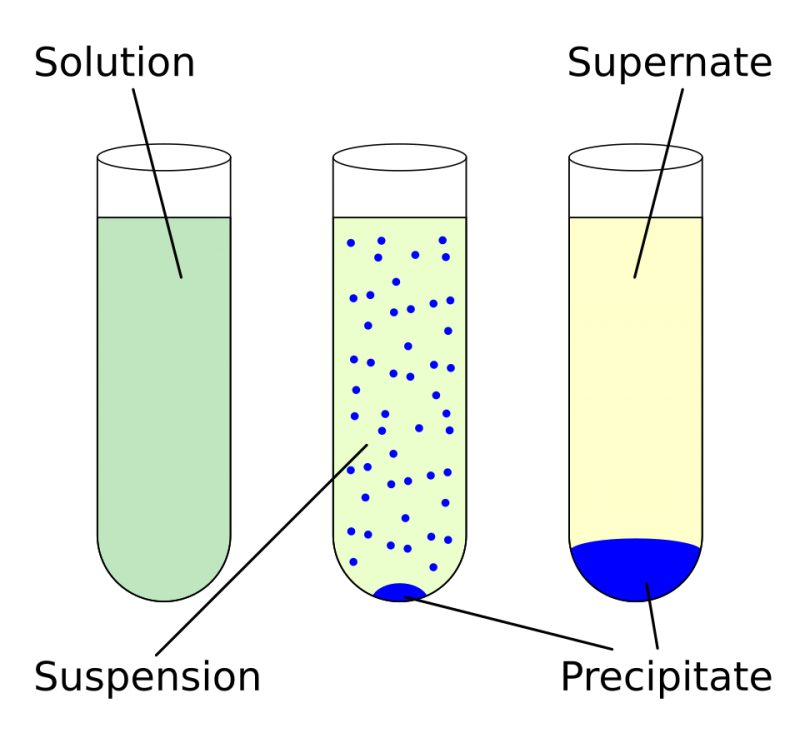
Solute and solvent
Stir sugar into water: sugar is the solute, water the solvent, sugar water the solution. Solutions are not only liquids: air is a gas solution and brass is a solid solution of copper and zinc.
Concentration
Mass percent shows grams of solute per 100 g of solution: 9 g of salt in 991 g of water gives 0.9% salt water. Molarity shows moles of solute per litre of solution.
Solubility and temperature
Sugar dissolves more in hot water than cold, so sweeten iced tea while it is still hot. Gases do the opposite: a fizzy drink left in the sun quickly goes flat.
Saturation and crystallization
When no more can dissolve, the solution is saturated. Cooling or evaporating a saturated solution makes the solute crystallize; salt fields use sunshine to evaporate seawater and collect salt.
Japanese – English terms
溶液 (ようえき) – solution; 溶質 (ようしつ) – solute; 溶媒 (ようばい) – solvent; 溶解度 (ようかいど) – solubility; 飽和 (ほうわ) – saturation; 濃度 (のうど) – concentration; 結晶 (けっしょう) – crystal.