
Electricity, magnetism & light · Physics
Electric current 電流
でんりゅう
Electric current is the directed flow of charge, usually electrons in a metal wire. Voltage drives it, resistance opposes it, and Ohm's law connects the three.
- Units
- Ampere (A), volt (V), ohm (Ω)
- Key law
- Ohm's law: I = U / R
- Related scientists
- Volta, Ampère, Ohm
Charge and current
All matter contains positive (protons) and negative (electrons) charges. Metals have many free electrons; connected to a battery, they drift one way, forming a current. Current is the charge passing per second, measured in amperes.
Voltage, resistance and Ohm's law
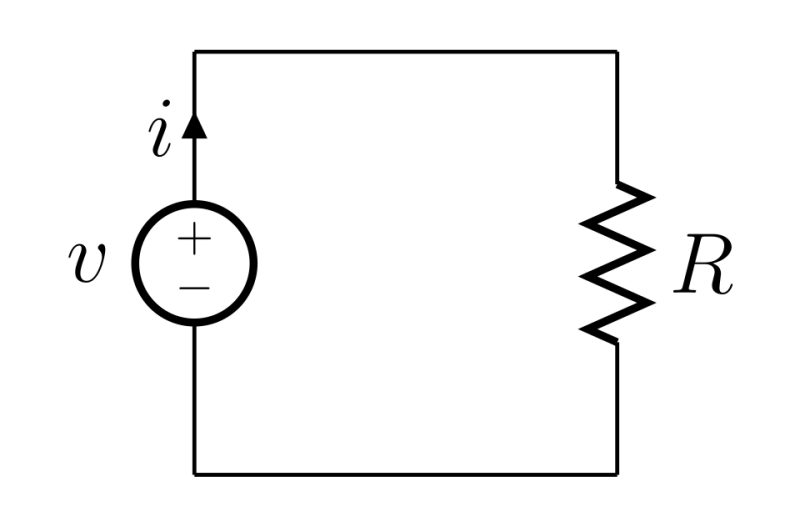
Picture water in a pipe: voltage is like the height difference pushing water, resistance like a narrow section. Ohm's law: I = V / R. A 6 Ω bulb on a 12 V battery carries 2 A. Power used is P = V × I.
Circuits in daily life
Household lights are wired in parallel, so one bulb going off leaves the others lit. Mains power is 220 V AC in Vietnam and 100 V in Japan; phones and batteries use DC. Current heats wires, the principle behind irons and kettles.
Japanese – English terms
電荷 (でんか) – electric charge; 電流 (でんりゅう) – electric current; 電圧 (でんあつ) – voltage; 電気抵抗 (でんきていこう) – resistance; オームの法則 (おーむのほうそく) – Ohm's law; 直流 (ちょくりゅう) – direct current; 交流 (こうりゅう) – alternating current.