
The solar system · Earth & the universe
The Sun 太陽
たいよう
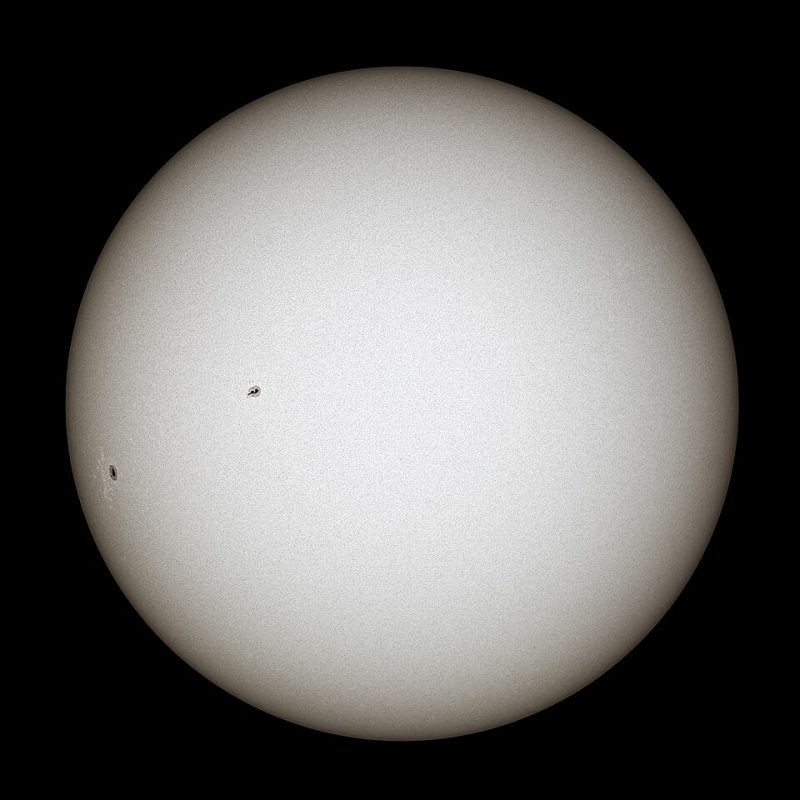
The Sun is the star nearest Earth, a ball of hot gas powered by nuclear fusion that supplies the light and heat life depends on.
- Distance from Earth
- About 150 million km (1 AU)
- Surface temperature
- About 5,500 °C
- Main components
- Hydrogen, helium
Where its energy comes from
The core is about 15 million °C. There hydrogen nuclei fuse into helium, releasing huge energy. Sunlight takes about 8 minutes 20 seconds to reach Earth, so we always see the Sun as it was eight minutes ago.
Solar activity
The Sun shows sunspots, flares and a constant solar wind. Sunspot numbers rise and fall in a roughly 11-year cycle. Strong solar storms can create auroras and disturb satellites, GPS and power grids.
Its future
The Sun is about halfway through its life. In roughly 5 billion years it will swell into a red giant and then shrink to a white dwarf; it is not massive enough to become a supernova.
Japanese – English terms
Vocabulary: 太陽 (たいよう) – Sun; 恒星 (こうせい) – star; 核融合 (かくゆうごう) – nuclear fusion; 黒点 (こくてん) – sunspot; 太陽風 (たいようふう) – solar wind; オーロラ – aurora.